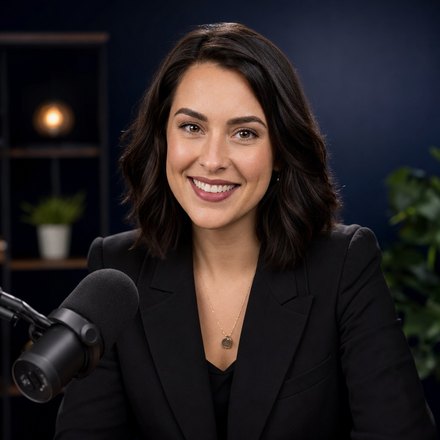
Jennifer
Host · UpTax Podcast Room
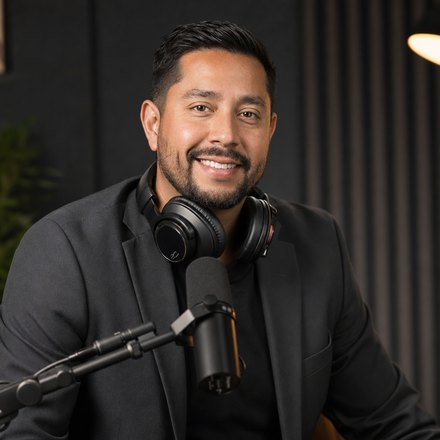
David Alvarez
fractional CFO · Chicago, Illinois
Tax Preparation Outsourcing Reimagined: Why AI Beats Offshore Hiring | UpTax Podcast Room
A Chicago fractional CFO explains how switching from offshore hiring to UpTax's AI tax preparation and review model cut costs, killed timezone delays, and freed up capacity without adding headcount.
Press play below — energetic intro, then the conversation, with a live audio-reactive waveform.
Jennifer
Host · UpTax
David Alvarez
fractional CFO · Chicago, Illinois
Press play — energetic intro, then the conversation
In this episode
A Chicago fractional CFO explains how switching from offshore hiring to UpTax's AI tax preparation and review model cut costs, killed timezone delays, and freed up capacity without adding headcount. In this episode of the UpTax Podcast Room, host Jennifer sits down with David Alvarez, a fractional CFO who runs an outsourced-CFO and accounting firm in Chicago, Illinois. They get into how he actually runs the practice day to day — managing 60 business clients — where the hours disappear during busy season, and the question every growing firm is asking right now: is it smarter to build an offshore team, or to automate tax preparation with AI? It's a candid, practical conversation for any CPA, EA or accounting firm owner who wants to add capacity without piling on fixed headcount.
“Thanks for having me on the show, Jennifer. I've been looking forward to this one because it's a topic I talk about with other firm owners constantly.”
“All of it. That's actually the challenge. We're their CFO, their bookkeeper, and come tax season, we're also doing the tax preparation work for most of them.”
What we cover
- How David Alvarez runs an outsourced-CFO and accounting firm — and where the real hours go each season
- The busy-season bottleneck: document intake, data entry, and review
- Offshore team vs. AI — the honest cost comparison for a US firm
- How AI tax preparation drafts a return before a person ever touches it
- Adding capacity without hiring another accountant or bookkeeper
- What changed for his practice after automating with UpTax
Key takeaways
1Capacity is the real constraint — not effort
Firms like David Alvarez's aren't short on hard work; they're short on hours. The win is removing the manual data grind so the team spends its time on review and advisory work instead of keying numbers.
2AI drafts, humans decide
UpTax's AI tax preparation reads the documents and drafts the return, with an offshore review layer checking the work. David Alvarez's team still reviews, signs and files — nothing goes out without a professional's sign-off.
3Offshore isn't the only way to scale
Recruiting, training and managing an offshore team carries real cost and overhead. Automating the preparation step can add the same capacity for less — and without the hiring.
4Source-linked numbers earn trust
Every figure traces back to the exact document it came from, so reviews are faster and the file is defensible under scrutiny.
About the guest
David Alvarez
David Alvarez is a fractional CFO who runs an outsourced-CFO and accounting firm in Chicago, Illinois, managing 60 business clients. Like most firm owners, he's spent years wrestling with busy-season capacity — which is exactly why his take on AI tax preparation is worth your time.
Questions firms ask
What is “Tax Preparation Outsourcing Reimagined: Why AI Beats Offshore Hiring | UpTax Podcast Room” about?
A Chicago fractional CFO explains how switching from offshore hiring to UpTax's AI tax preparation and review model cut costs, killed timezone delays, and freed up capacity without adding headcount. It's aimed at CPA, EA and accounting firm owners deciding how to scale without adding fixed headcount.
Does UpTax file returns for the firm?
No. UpTax is AI tax preparation software — it drafts the return and an offshore layer reviews it, but the firm always reviews, signs and files. A licensed professional stays in control the whole way.
Is AI tax preparation cheaper than building an offshore team?
That's the heart of this episode. For many firms, automating the preparation step adds the same capacity as an offshore team — without the cost of recruiting, training and managing people.
How can I try UpTax for my practice?
Book a short demo at uptax.ai and we'll show you how UpTax prepares a real return end to end — from raw documents to a reviewer-ready draft.
Topics
Run your firm on AI tax preparation
See how UpTax prepares a real return end to end — from raw documents to a reviewer-ready draft — so your team adds capacity without hiring.
Book a demo
Automate Your CPA or Tax Practice with UpTax.ai
Reduce up to 90% of human effort.
Book a demoSOC 2 · human sign-off on every return
More episodes
AI Tax Preparation vs. Hiring an Accountant: Which Scales Your CPA Practice Faster?David Alvarez · fractional CFO How UpTax Supports CPA Firms: From AI Draft to Reviewed Return in Half the TimeEmily Thompson · firm founder
 AI Tax Preparation for Mid-Market Firms: How Sarah Mitchell Automated Her CPA Practice with UpTaxSarah Mitchell · CPAHow UpTax Supports CPA Firms: AI Tax Preparation That Cuts Review Time in HalfDavid Alvarez · fractional CFOAutomate Your Tax Practice Without an Offshore Team: How UpTax AI Does What 5 Remote Preparers DidEmily Thompson · firm founder
 AI Tax Preparation vs. Hiring an Accountant: Which Scales Your CPA Practice Faster?Robert Kim · tax firm owner